Sunday, June 13, 2021

Enslaved of John Nelson Sr, Slaveholder, Halifax County VA and Maury County TN

John Nelson, Sr was born 1752/54 in Henrico, VA and died 30 June 1823 in Maury County, TN. He married Mary "Polly" Daniel who was born 1760 in Charlotte Courthouse, VA. They had 9 children and lived in Halifax County, VA until their move to Tennessee. [*see post regarding William Daniel for more information for this family.]

Petition for division of negroes of John Nelson, SR, deceased by Mary Nelson, Widow of John Nelson Sr deceased;  Elizabeth Uland, widow of Thomas Uland, deceased, formerly Elizabeth Nelson;  Abram  Trible and Polly, his wife, formerly Polly Nelson; Sally Powel, widow of Charles Powel, deceased, formerly Sally Nelson; William Powel and Nancy, his wife, formerly Nancy Nelson; Matthew Nelson, William D Nelson, James Nelson, John Nelson Jr and Pleasant Nelson, all children and legal heirs of said John Nelson, Sr, deceased.  "all over the age of twenty-one years of age, and all the only heirs of said John Nelson, deceased."  

January term 1823. All signed. Commissioners appointed to divide: Swan Harden, Edward W Dale, Esquire, and Major John Brown.  Recorded 10 Jan 1824

Source: Maury County, Tennessee Wills and Settlements 1807-1824, page 164.

Probate of his will included the division of his slaves:

Appraised values:

Aggy value * Eli combined value   $300
Ben $350
Jessee   $450
Milly & Infant   $500
Silvia   $500
Bob   $425
Phebe   $300
Caroline   $250
Meredith   $300
Derinda   $225
* Eli

Commissioners: John Gordon, William Stockard.  Paye: John McGill, Richard Anderson.  Administrator:  George Nixon

To Matthew Nelson - Durinda at $225.00 and Elizabeth Uland pays Matthew Nelson in cash $135// $360
To Elizabeth Uland - Mily & child at $500
To Sally Powell - Silvey at $500
To James Nelson - Meredith at $300 & Sally Powell pays James Nelson in cash $60//$360
To Mary Nelson - Aggy & Eli at $300 & Sally Powell pays Mary Nelson in cast $60//$360
To Pleasant Nelson - Jessee at $450
To Abraham Trible - Pheobe at $300 and John Nelson pays Abram Tribble $60//$360
To John Nelson - Bob at $425
To William Powell - Caroline at #250 and Pleasant Nelson pays him in cash $90 and Sally Powell pays him in cash $20//$360
To William D Nelson - Ben at $350 and John Nelson pays him in cash $15 and Elizabeth Uland pays him in cash $5//$360

Source: TN Wills and Probate Records 1779-2008 for John Nelson. Maury County Petition Papers - John Nelson Estate.  Entered: Record Book C (or G) page 11.


Of Note:  Mary "Polly" Daniel married John Nelson. Her father, William Daniel's will: " ITEM I give and bequeath to my daughter Mary and her husband John Nelson for and during the natural life of my said daughter, one negro girl named Judah now in the possession of my said daughter, and my desire is that after her death the said negro will all her increase shall be equall(y) divided among such as she shall leave to them and their heirs forever."  Judah is not mentioned in John Nelson's will.  


William D Nelson s/o John Nelson

1820 Census  Maury County, TN

2 slaves

1830 Census  Maury County, TN

6 slaves  [One is probably Ben - given to William by his father]


Pleasant Nelson 1792-1862, s/o John Nelson. He married Elizabeth Cherry b1799. They had one child, Nancy Elvira.

1820 Census  Maury County, TN

3 slaves

1830 Census  Maury County, TN

3 slaves  [One may be Jessee - given to Pleasant by his father - however, he had 3 slaves in 1820] 


Saturday, June 12, 2021

Enslaved of Benjamin Terry, Slaveholder, Pittsylvania County, VA

Benjamin Terry of Camden Parish Pittsylvania County died 28 Dec 1760. 

Executors: his wife Elizabeth Irby Terry and son Nathaniel.


To son Nathaniel Terry - survey of land on Sandy Creek and 2 negroes

To son Benjamin land I now live on and 2 negroes

To son Peter land on Mine Branch and  2 negroes

To son Joseph Terry - 2 negroes

To son Robert - survey of land and 2 negroes

To daughter Keziah Murphy - 2 negroes

To daughter Livinia King and her daughter Grace Terry - 2 negroes

To daughter Sarah Terry - 2 negroes

To daughter Eizazabeth Buckingham - 2 negroes

To daughter Mary Terry - 2 negroes. 

The rest of estate to be sold and divided equally between his children.  

Source: Pittsylvania County, VA Will Bk 5, page 378


Friday, June 11, 2021

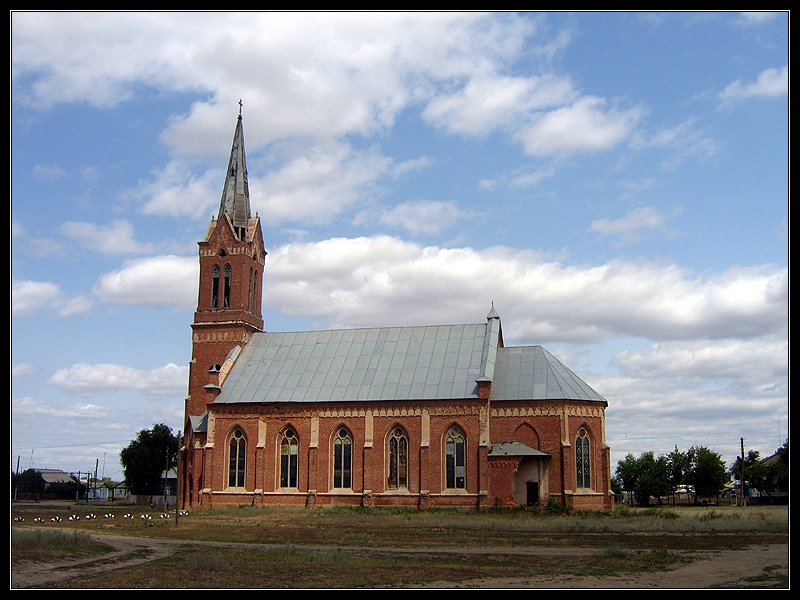
The Church at Gnadentau - A Silent Witness

My great grandfather George Peter Schreiner was a builder of church steeples, as was his father and his father’s father. Peter was born 6 April 1850 in Huck to Johannes Schreiner and his wife Maria Lohmeier. While working on a church steeple in a rural area on the Wiesenseite, Peter met Katherina Margarita Spengler, daughter of Friedrich Spengler and Elizabeth Lochmann, who lived in Wiesenmuller.


In 1873 they were married in the Evangelical Lutheran Church in Gnadentau, which steeple Peter had built. Though they owned land and lived in Gnadentau, Peter continued with his carpentry. Their first two sons, Jakob and Frederich were born and baptized in Gnadentau. Katherine’s sister died and Peter and Katherine adopted her two orphaned daughters. Sometime before 1885 a diphtheria epidemic hit. All four children died and were buried in Gnadentau.

Peter and Katherine left Gnadentau for Baku. There Peter worked as a Master Carpenter for Noble Brothers Petrolium Company, a British firm, in their furniture manufacturing plant. Three sons were born them in Baku. Alexander Jacob, Frederich August, and Oscar Karl. In 1892 they immigrated to America, first to Russell County, KS where they stayed with their sponsor, a maternal uncle of Katherine’s (a Mr. Lochmann) and later settling in Nebraska. My grandfather, Robert Herman, was born 23 July 1898 in Stanton, NE. When they sold their farm in Pilger, NE in 1910, Peter and Katherine moved to Lincoln. They owned 2 homes. 1139 and 1137 S. 7th in the South Bottoms. Later 1139 S. 7th would become the offices, then the museum of the American Historical Society of Germans from Russia.
 
My second cousin Lou Schreiner remembers Peter’s tools. 8 to 12 block planes which were made entirely of wood except for the blade. The depth of cut was regulated by moving the blade up and down in the block and were wedged solid with a tapered flat peg. The blades were of varying sizes as small as ¼” wide. The surface of the block of the plane had different grooves to get the particular groove wanted on the woodworking project at hand. Given the fact that most of the wooden structures, particularly the churches, of the Volga Deutsch contain no nails, Peter must have been a skilled craftsman.

In spite of all the stories of the destruction of our German churches, in fact our homeland in general, I still dreamed of one day seeing a steeple built by one of my Grossvater. It was with this dream that I traveled to Russia.

Our time in Saratov was all too short; visits to villages were whirlwind tours. The first day Beideck = such desecration. The body of the church stand, but the steeple my Schreiner Grossvater built is gone. Huck - after turning the church into a dance… they bulldozed it. Norka - utterly vacant land. Grimm - again, nothing left of the church. The second day: Brunnental - the church was gone; Marian burg - the Catholic Church stands, a wreck. They had tried to bulldoze it but it would not completely succumb. The third day: Wiesenmuller - once again the church was long gone, a medical clinic was built behind where the church once stood.

We piled into the van to head for our final destination: Gnadentau. My last chance. The next day we would leave the Volga region for Kazahkstan. Leaving Wiesenmuller the driver of our van stopped several times to ask directions. Each time the advice ended with “you will see the church steeple.” My heart was in my mouth. Yet after what we had seen in other villages I dared not let my hopes soar too high.
 
The church steeple circled.

Roughly a mile outside of Gnadentau we saw the church steeple. There are no words to describe my joy.
In Gnadentau. Where my Peter married owned land, worked, and buried 4 children. Where I met and visited with my cousin Jakob Winter and discovered that my dear traveling companion, Marie (Schafer Houser) and I are cousins. They had tried to bulldoze it; torn the clockworks out in the 1970’s; used it as a granary and now as a barn.

The church at Gnadentau
 

In Gnadentau, I ignored the cows lazing where once church pews stood and said a prayer of thanksgiving that I had been allowed to see this church and the steeple my great grandfather built.


Note: In 1993 it was being used as a barn for cattle, as well as grain storage.  Since that time restoration began and today church services are once again being held in the church.